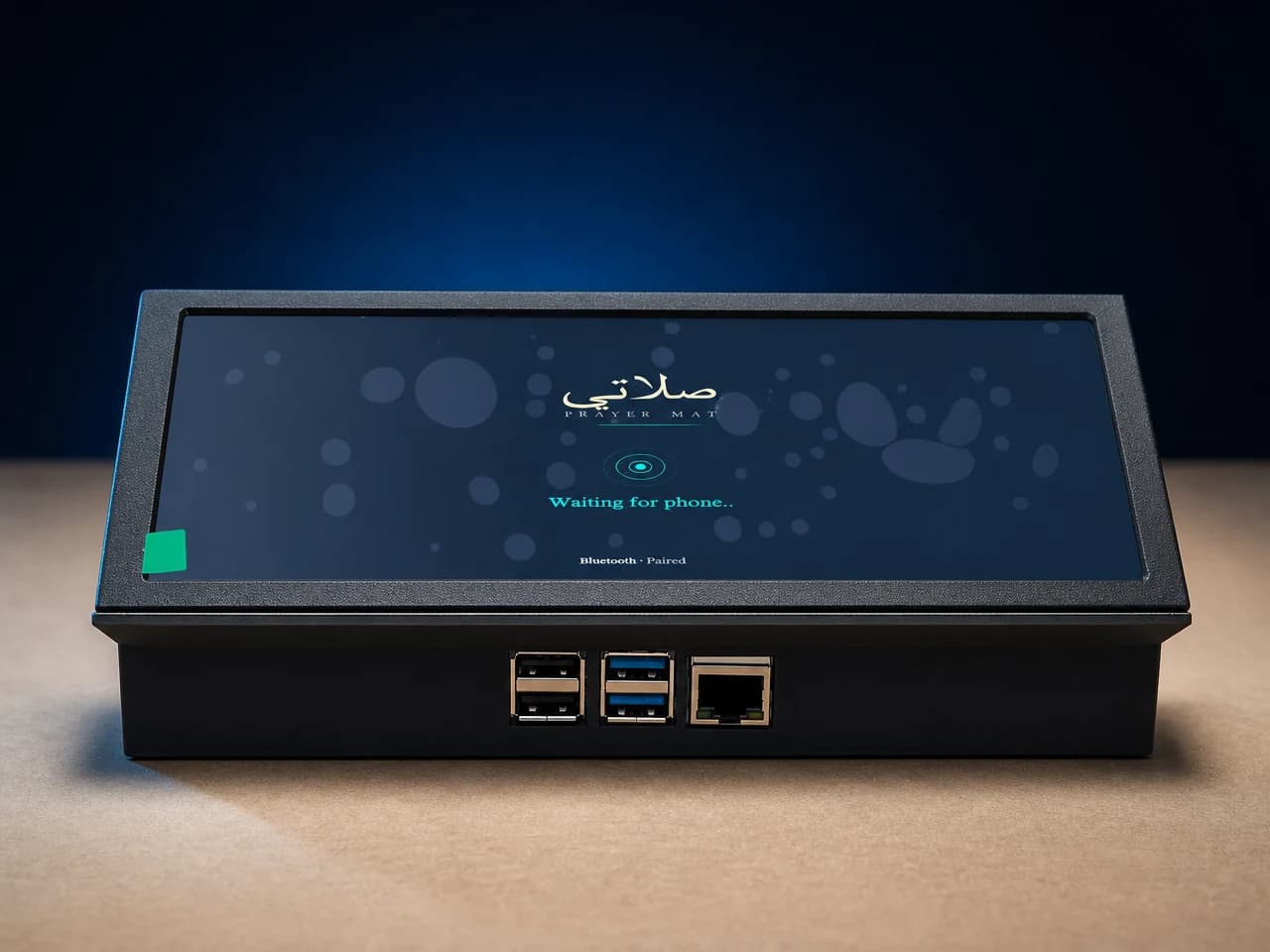
Prayer anchors the Muslim day. For someone still learning it, though, each prayer can carry a quiet anxiety: Which surah comes next? Did I say that correctly? Am I doing this right? That hesitation is enough to make a person put off stepping onto the mat.
The Salati Prayer Mat is our attempt to lift it. It is a working prototype currently in development — not a finished product — and this is an early look at what we are building, and why.
Why prayer can feel difficult for learners
Prayer asks for words in a language many Muslims are still learning, recalled in order, under the pressure of the moment. New Muslims often learn the movements long before the recitations. Children learn a little at a time. Muslims who grew up outside an Arabic-speaking environment may read a transliteration off a phone, lose their place, and begin again.
None of that reflects a lack of sincerity. It is the ordinary gap between wanting to pray well and having memorised everything the prayer asks of you. Most of the help that exists today sits outside the prayer — a book to study beforehand, an app to check afterwards. Very little helps in the moment itself, and a phone in the hand is a poor companion in sujud.
What we are making
The Salati Prayer Mat is being developed as a guided prayer companion connected to the Salati experience. The intent is simple: put clear, respectful guidance where it is actually needed — in front of the worshipper, during the prayer — through an interface calm enough that it never becomes the thing you are paying attention to.
Guidance should be glanceable rather than demanding. It should support the prayer rather than narrate over it. And it should fade in relevance as memory grows, which is rather the point.
Who it is for
We are designing for people who want to pray well and are still learning how:
- Non-Arabic speakers who know the meaning but not yet the words
- New Muslims taking their first steps into a daily prayer routine
- Children learning to pray alongside their families
- Muslims who have not yet memorised the required Qur’anic recitations
- Anyone who wants more confidence while they continue to learn
Uncertainty should not be the reason a prayer is delayed, shortened, or avoided.
From idea to working prototype
What exists today is a development unit we build, break, and rebuild. It pairs a wide display with local computing hardware inside a custom 3D-printed enclosure, and connects to a phone over Bluetooth — the screen in the photograph above is the prototype waiting for that connection.
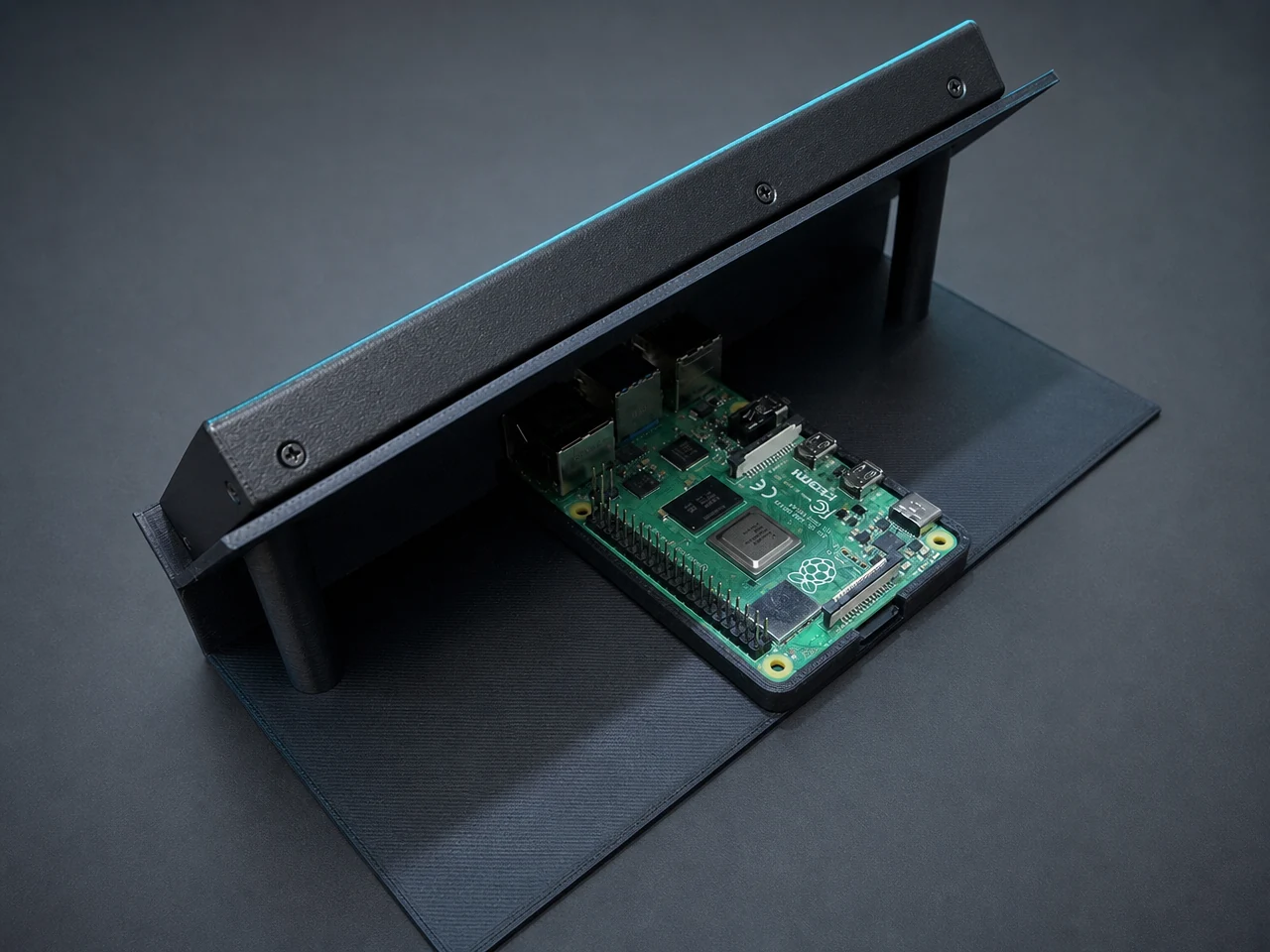
Under the display sits an ordinary single-board computer on a printed frame that sets the screen at a viewing angle. Nothing here is precious. The enclosure is printed precisely so we can reprint it next week with the angle changed by a few degrees, and the electronics are exposed precisely so we can swap them out.
Each round of testing is about a different question. Does the connection come back reliably after the device has been sitting idle? Is the display readable from the position a person actually prays in, rather than the position a designer imagines? Does the enclosure hold its shape and stay out of the way? This is a prototype, not the final consumer design, and the answers keep changing what it looks like.
A bridge toward confident, independent prayer
The Salati Prayer Mat is not a replacement for learning Arabic, for memorising the Qur’an, for trusted teachers and scholars, or for the personal devotion that prayer is made of. It cannot be, and it is not trying to be.
What we are building is a bridge: something that helps a person begin, practise, and grow, and that matters less to them each month as their memory takes over. Our aim is that no Muslim feels unable to pray simply because they are still learning.
Coming soon
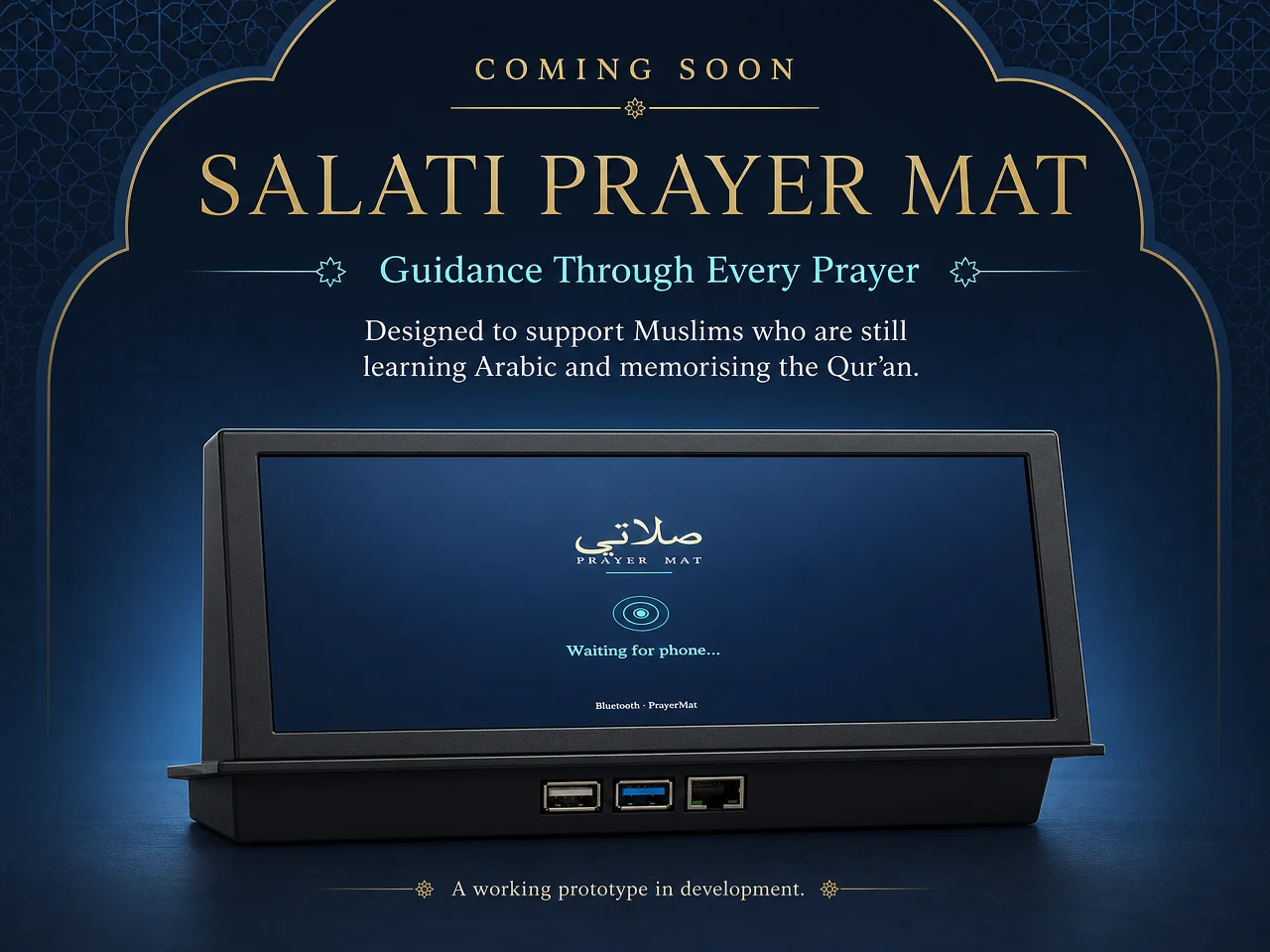
The Salati Prayer Mat is in active development. We are not announcing pricing or availability yet — what we can share is the work itself, and we will keep sharing it: later prototypes, what testing teaches us, and how the final experience takes shape.
Salati Prayer Mat — Guidance Through Every Prayer.